
Concrete Cost Guide: Slabs, Patios & Driveways (2026)
How concrete projects are priced in 2026 — bags vs. ready-mix, what raises the cost, DIY vs. hiring out, and the base and finishing work that budgets often miss.
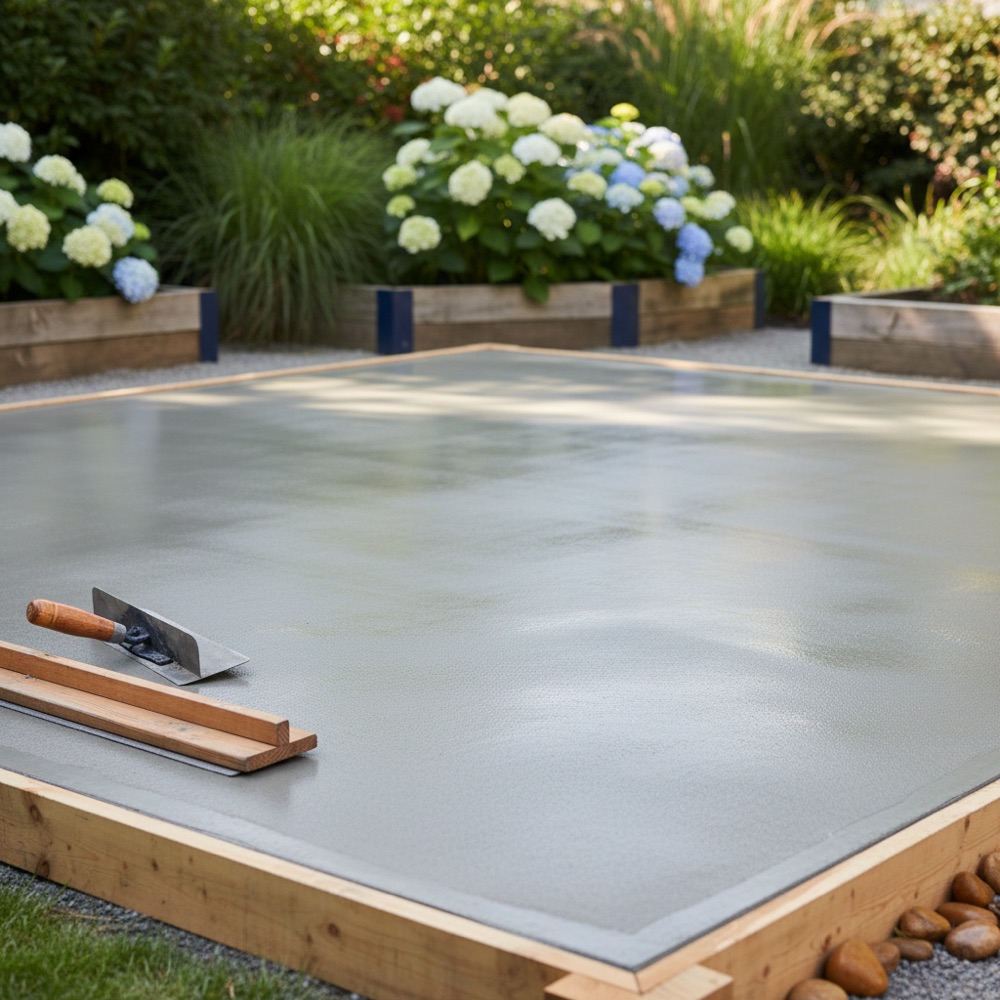
Concrete projects — a patio, a shed pad, a walkway, or a driveway — look simple but hide real cost in the prep and finishing work. Whether you mix bags yourself or order a ready-mix truck, here is how concrete is priced in 2026 and where budgets go wrong. To size your pour, start with the concrete calculator.
Two ways to buy concrete
The first cost decision is how you source the concrete itself:
- Bagged mix — 40, 60, or 80 lb bags you mix on site. Best for small jobs where hauling and mixing by hand is manageable.
- Ready-mix delivery — a truck delivers wet, consistent concrete. Best for larger pours, where mixing dozens of bags becomes impractical.
The crossover is roughly half a cubic yard to a cubic yard. Below that, bags usually win on cost and convenience; above it, ready-mix saves hours and gives a more uniform result. Remember that ready-mix suppliers often have minimum orders and short-load fees, so tiny deliveries can be surprisingly pricey per yard.
The cost most people forget: site prep
The concrete is only part of the bill. A durable slab needs a proper base, and that base is real work:
| Step | Why it matters |
|---|---|
| Excavation & grading | Removes sod/soil and levels the area |
| Compacted gravel sub-base | Drainage and a stable foundation that resists cracking |
| Forms | Hold the shape and edges during the pour |
| Rebar or wire mesh | Reinforcement for strength, often required by code |
| Footings (where required) | Below frost line in cold climates |
Skipping or skimping on the base is the most common way a cheap slab turns into an expensive crack repair later.
What drives concrete cost up
- Thickness and reinforcement. A 6-inch reinforced driveway uses far more material than a 4-inch patio.
- Site access and excavation. Hard-to-reach areas, slopes, or heavy digging add labor.
- Finish. A basic broom finish is economical; stamped, colored, or polished concrete costs more.
- Climate requirements. Frost-line footings and proper drainage add work in cold or wet regions.
- Order size. Very small ready-mix loads carry minimums and fees; very large jobs need more labor and finishing time.
DIY vs. hiring a concrete contractor
Small slabs — a shed pad, a short walkway, a compact patio — are achievable DIY projects if you are prepared for the physical work and the fact that concrete sets on its own schedule. Bigger or load-bearing pours (driveways, garage slabs, anything structural) are usually better left to a contractor, who brings the crew, tools, and finishing skill to place and level it before it cures. Whichever path you choose, get the base right and round your order up — running short mid-pour creates a weak cold joint.
Budgeting your project
- Size the pour with the concrete calculator to get cubic yards and bag counts.
- Add 5–10% waste so an uneven subgrade or form flex does not leave you short.
- Budget the base — gravel, forms, and reinforcement are not optional.
- Decide bags vs. ready-mix based on your total volume.
- Check local code for thickness, reinforcement, and footing depth before you start.
On the numbers: Concrete material and labor prices vary by region, supplier, finish, and site conditions. These are planning factors, not a quote. Confirm current pricing with local suppliers and licensed contractors.
Size your slab with the concrete calculator and plan the pour with confidence.